

Technical Column
Acoustic Cameras and Anechoic Chambers — Visualizing Silence for Sound Source Analysis —
Oct 31, 2025
- HBK × SONORA Acoustic Measurement Solution Official Website
- Technical Column
- Acoustic Cameras and Anechoic Chambers — Visualizing Silence for Sound Source Analysis —
Sound Source Localization with Acoustic Camera + Anechoic Chamber
Introduction
Modern acoustics has evolved from listening to seeing.
Acoustic cameras convert sound into images, revealing where and how it is generated.
Their full potential is realized only in reflection-free environments—anechoic chambers—where silence itself becomes a canvas for visualization.
What Is an Acoustic Camera?
An acoustic camera uses a microphone array to calculate the direction of incoming sound waves and reconstructs sound sources as images.
Common techniques include:
| Method | Characteristics | Typical Use |
|---|---|---|
| Beamforming | Fast, real-time display | Mechanical and fan noise |
| CLEAN-SC | High spatial resolution | Multiple or complex sources |
| MUSIC | Phase-based high-accuracy localization | Micro noise and R&D |
The resulting “sound maps” make it possible to intuitively detect even subtle anomalies.
Why Use It in an Anechoic Chamber?
Acoustic cameras are highly sensitive to reflections.
In reflective environments, false images or ghost sources appear.
Anechoic chambers provide the ideal testing space because they:
- Eliminate reflections from all surfaces
- Suppress background noise
- Preserve true phase relationships
This ensures precise localization and accurate radiation mapping.
Applications of Visualization in Anechoic Spaces
Typical applications include:
- Motor and actuator noise diagnostics
- Fan and appliance radiation evaluation
- Automotive component noise mapping
- Speaker and transducer directivity testing
Early-stage design verification benefits greatly from visual confirmation of acoustic origins.
Data Fusion: Combining Sound, Vibration, and Vision
Recent advancements integrate acoustic imaging with other sensing domains:
- Laser vibration analysis overlay
- Video-phase synchronization
- Frequency-dependent energy mapping
This multi-domain approach helps engineers understand why sound occurs—turning visualization into a diagnostic and design improvement tool.
Integrating Camera and Chamber Design
To achieve optimal visualization quality, chamber design must support the camera system:
- Proper distance and angle for array field of view
- Uniform absorption to minimize residual reflections
- Non-reflective mounts and vibration isolation
- EMI and cabling management
Anechoic chamber and camera system design must work as a single acoustic instrument.
Conclusion: Visualizing Silence
An acoustic camera doesn’t just show sound—it reveals silence.
By visualizing what cannot be heard, engineers can see how quietness behaves.
In a reflection-free space, silence becomes measurable, and visualization becomes the next step in mastering acoustic performance.
“Visible silence” is the new language of acoustic engineering.
Latest Posts in Technical Column
-
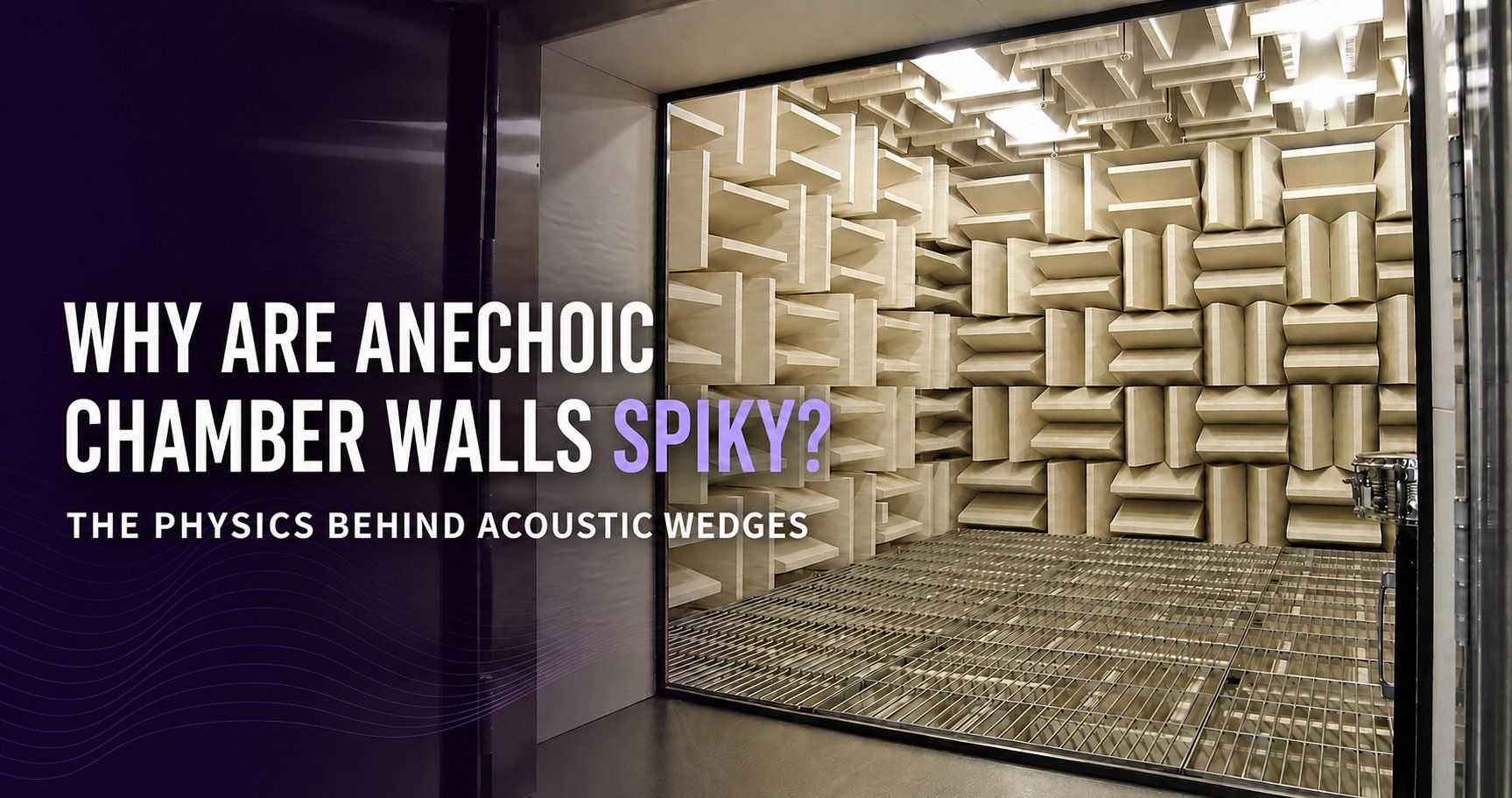
2026.08.03
Why Are Anechoic Chamber Walls Spiky? How Acoustic Wedges Work -
2026.07.28
White Noise vs Pink Noise vs Sweep Signals -
2026.07.13
Acoustic Adjustment with Soundproof Partitions ― Applications for Anechoic Chamber Tuning, Simplified Acoustic Measurements, and STI Environment Design ― -
2026.07.08
Why HBK × SONORA? ― The Benefits of Integrating Acoustic Instrumentation and Acoustic Test Environments ― -

2026.05.18
Misconceptions About a Sound Absorption Coefficient of 0.99 ― How ISO 3745:2012 Changed the Philosophy of Anechoic Room Evaluation ― -
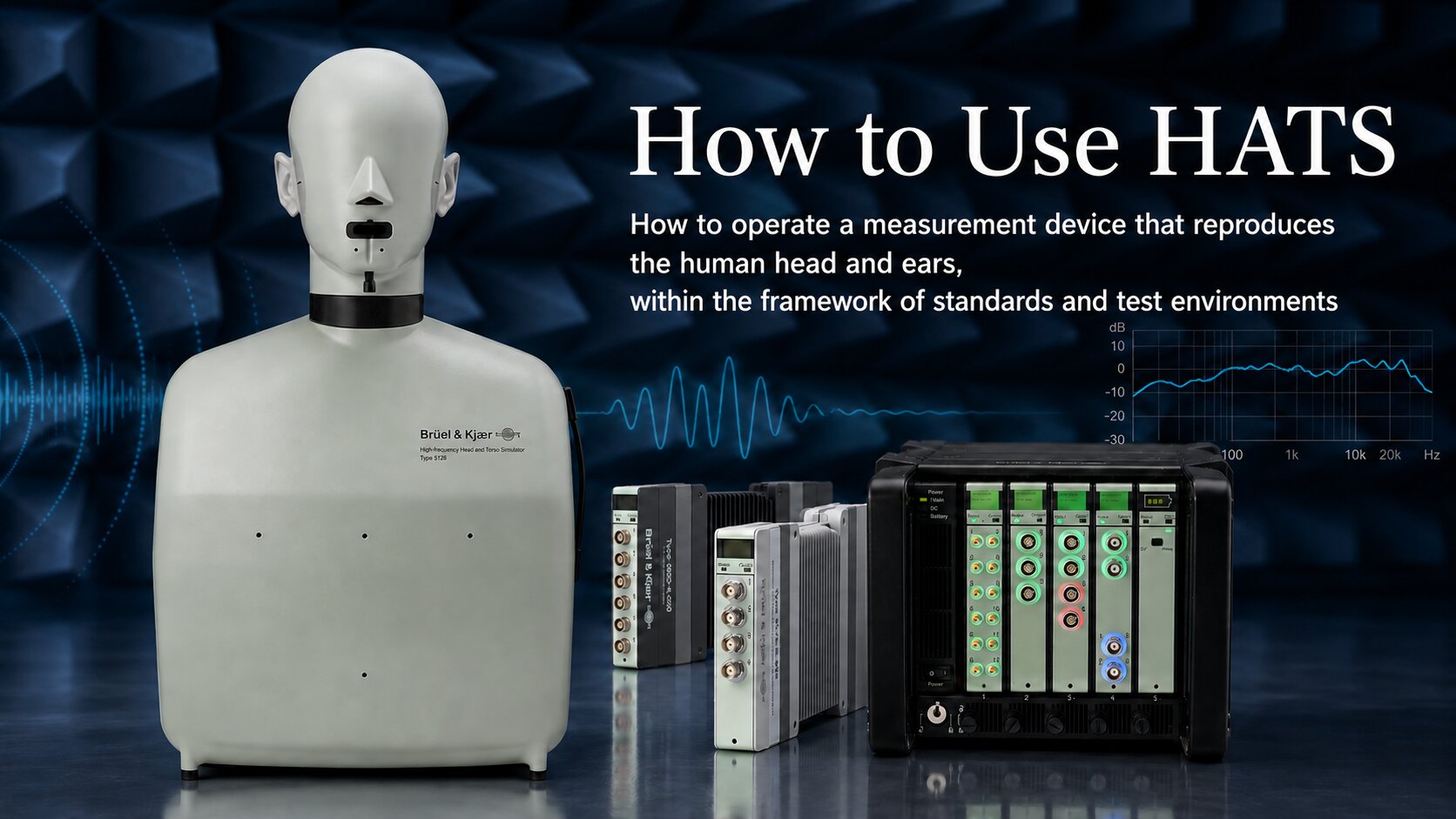
2026.05.13
How to Use HATS ― Operating a Measurement System That Reproduces the Human Head and Ears Within the Framework of Standards and Acoustic Environments ― -
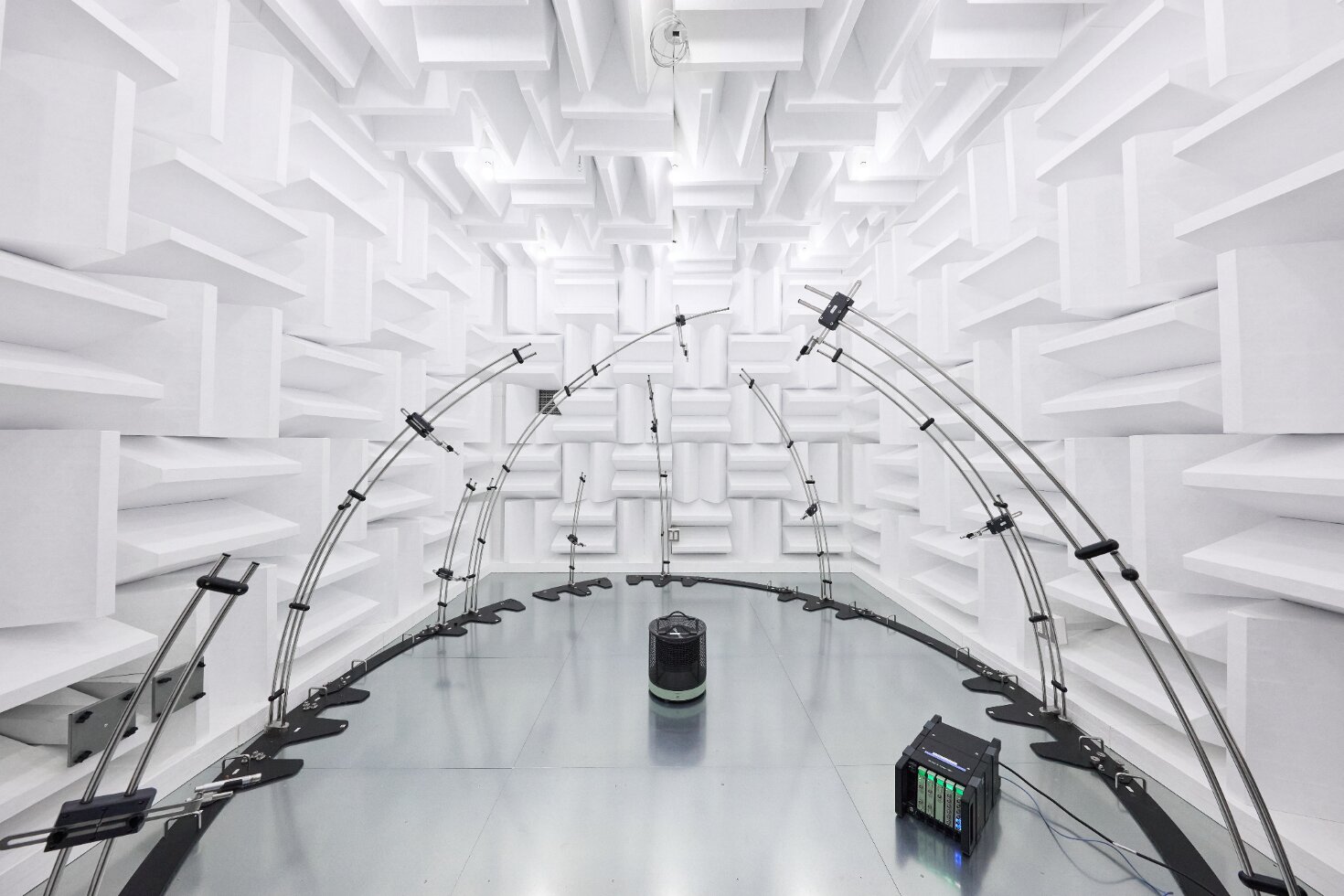
2026.04.13
Evaluation Methods in Building Acoustics: Streamlining Field Measurements and Material Assessment in Laboratory Environments -
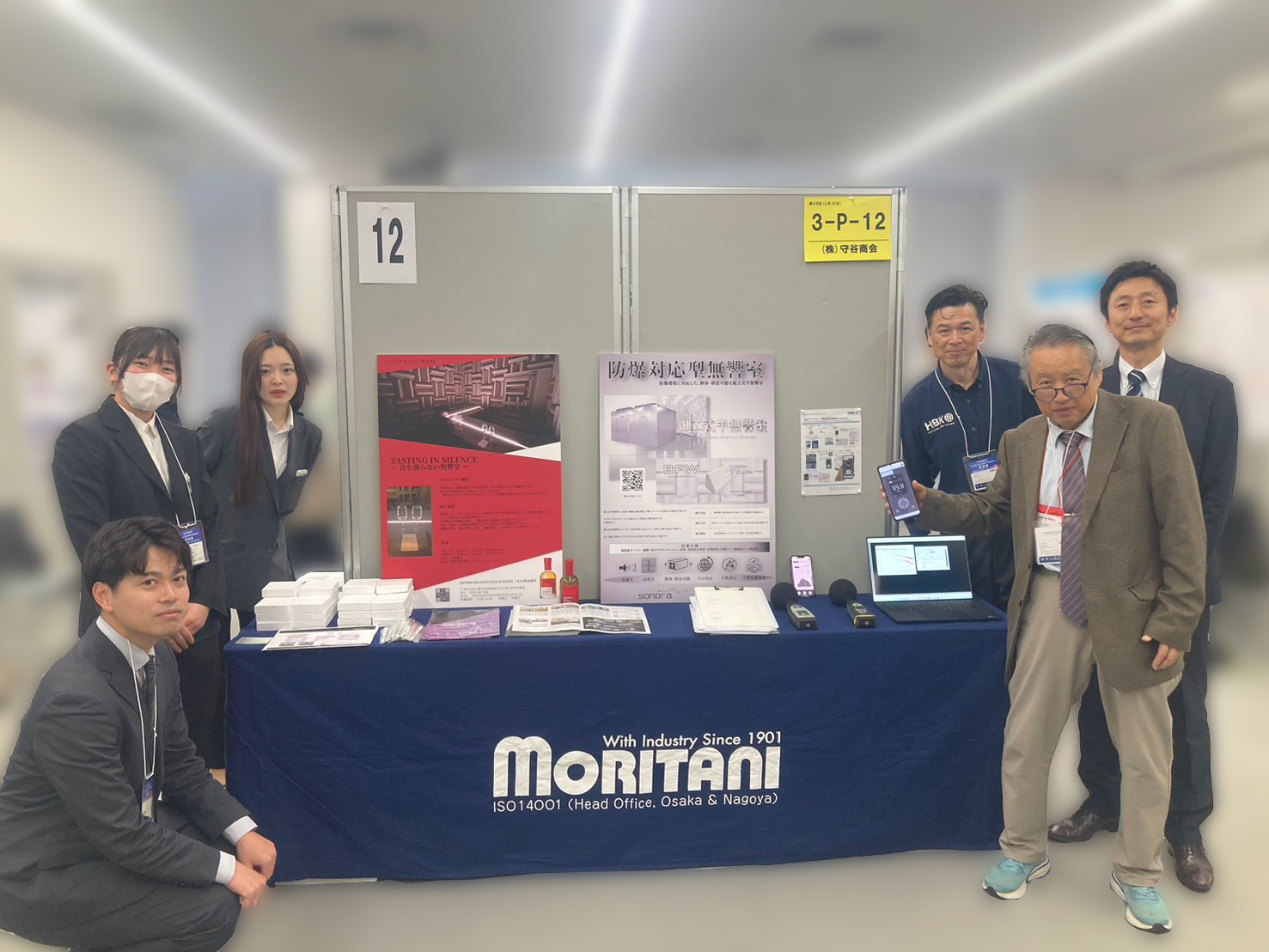
2026.03.23
We participated in the corporate exhibition at the Acoustical Society of Japan (ASJ) Meeting on March 19, 2026 -
2026.03.10
How to Read Standards Related to Anechoic Chambers ― Organizing Sound Power Measurement Standards and Qualification of Test Environments ― -
2026.01.29
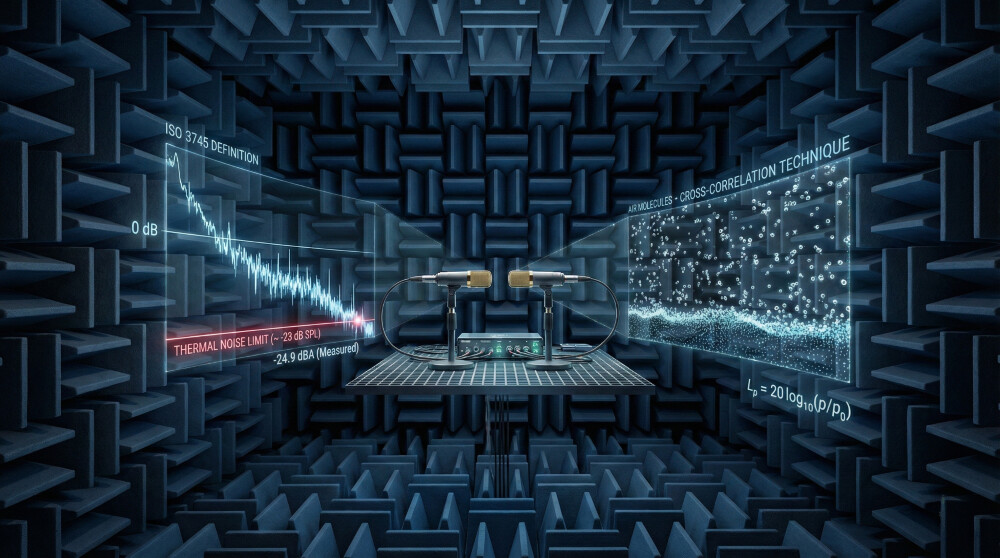
Can We Create “Absolute Silence” on Earth? — An Academic Reading of Anechoic Chambers and Ultra-Low Background-Noise Measurement —

Contact Us
- Contact us by email
-
- Contact us by phone
-
Moritani Shokai
(Machinery Department No. 2, Tokyo Head Office)


Introduction of the Manufacturer
-
Hottinger Bruel & Kjaer
HHBK is a merger of two companies: Brüel & Kjær of Denmark and HBM of Germany.
Brüel & Kjær is one of the world’s leading manufacturers of acoustic and vibration measurement instruments, known as a total measurement chain supplier.Learn more about HBK
-
Sonora Technology Co., Ltd.
Sonora Technology is a leading Japanese manufacturer of industrial anechoic chambers and anechoic boxes.
From design and manufacturing to installation and acoustic performance assurance, Sonora provides fully integrated solutions to build complete acoustic measurement environments from the ground up.Learn more about Sonora
Contact / Request Brochure
For inquiries or consultations regarding the total solutions provided by HBK × Sonora, please feel free to contact us using the Contact button.
If you would like a brochure sent by mail, please use the Request Brochure button.