

Technical Column
Common Acoustic Measurement Issues and Noise Countermeasures in Anechoic Chambers and Anechoic Boxes
May 26, 2025
- HBK × SONORA Acoustic Measurement Solution Official Website
- Technical Column
- Common Acoustic Measurement Issues and Noise Countermeasures in Anechoic Chambers and Anechoic Boxes
Acoustic Power Measurement
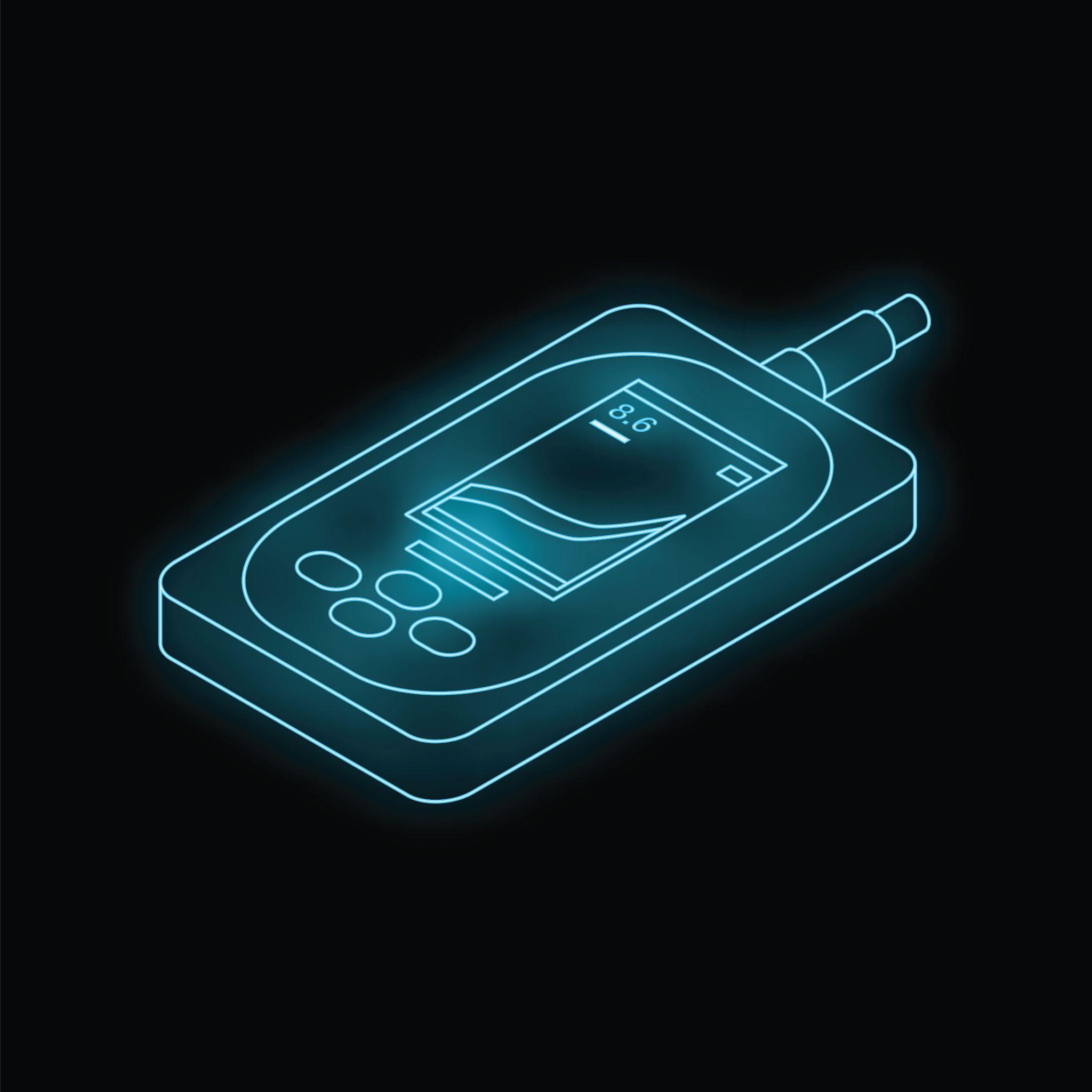
Common Acoustic Measurement Issues and Noise Countermeasures in Anechoic Chambers and Anechoic Boxes
Anechoic chambers and anechoic boxes are designed to isolate external noise and provide a controlled environment for accurate acoustic measurements.
However, to ensure precise results, proper attention must also be given to equipment placement, cable management, and instrument calibration.
This guide outlines common noise-related issues in these environments—and how to resolve them.
Common Noise Sources in Anechoic Testing
Environmental noise within the measurement space
- Electronic noise from the measuring instruments themselves
- Electromagnetic interference (EMI) through cables
- Reflected sound from unintended objects inside the chamber
Cable-Related Noise Problems
- Power cables introducing electrical noise into audio signals
- Audio cables picking up external electromagnetic noise
- Poor cable routing or bundling causing interference
Noise Countermeasures
Environmental Optimization
- Apply sound-absorbing materials to walls, ceilings, and floors to suppress unwanted reflections
- Remove any non-essential objects from the chamber that may cause reflections
- Use separate cable ports (penetration holes) for power and signal lines to minimize interference
Cable Management Solutions
- Use shielded twisted-pair audio cables
- Attach ferrite cores to cables to reduce high-frequency EMI
- Physically separate power and audio signal lines
- Avoid bundling cables; keep cable lengths to the minimum necessary
Long cables can increase susceptibility to induced noise—shorter is better
Power Noise Suppression
- Use an isolation transformer to eliminate ground loop and AC line noise
- Plug equipment into filtered power strips
- Ensure proper grounding to drain unwanted currents
- Where possible, use battery-powered devices to eliminate AC noise influence
Minimizing Equipment-Induced Noise
- Disable or avoid wireless functions (Wi-Fi, Bluetooth) during measurement
- When using an anechoic box, keep measurement devices outside the enclosure when possible
- Limit use of non-essential devices inside the chamber to reduce reflections
- Ensure instruments are calibrated prior to testing; uncalibrated devices can introduce both noise and measurement error
Pre-, During-, and Post-Measurement Checklist
Before Measurement
- Measure background noise (K1) to verify ambient conditions
- Separate power and signal cables completely, using dedicated cable ports
- Apply ferrite cores to minimize cable noise
- Confirm calibration of all instruments
During Measurement
- Monitor data in real time for anomalies
- Avoid unnecessary movement or vibration that could affect stability
- Evaluate influence of the power supply and use additional filters if needed
After Measurement
- Analyze collected data for potential noise contamination
- Document all measurement conditions for reproducibility
- If noise is detected, identify the source and implement improvements for future measurements
Maximizing the Accuracy of Anechoic Measurements
While anechoic chambers and boxes significantly enhance acoustic measurement quality, improper handling of equipment or cables can still introduce unexpected noise.
By implementing the countermeasures above, you can make full use of your testing environment and achieve highly reliable acoustic data.
If you’re experiencing measurement noise, take the time to review each element of your setup—small changes can make a big difference.
Latest Posts in Technical Column
-
2026.08.03
Why Are Anechoic Chamber Walls Spiky? How Acoustic Wedges Work -
2026.07.28
White Noise vs Pink Noise vs Sweep Signals -
2026.07.13
Acoustic Adjustment with Soundproof Partitions ― Applications for Anechoic Chamber Tuning, Simplified Acoustic Measurements, and STI Environment Design ― -
2026.07.08
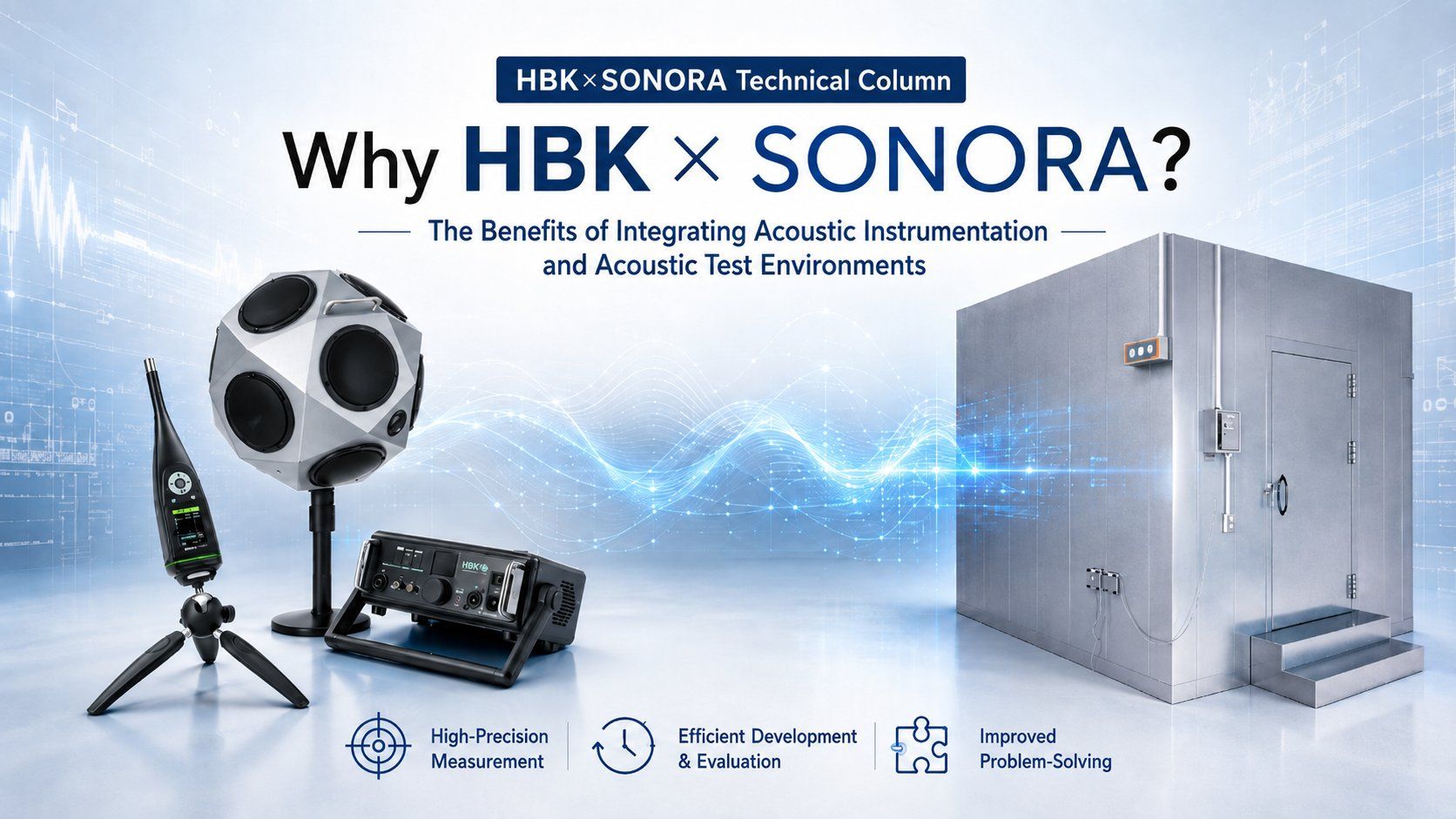
Why HBK × SONORA? ― The Benefits of Integrating Acoustic Instrumentation and Acoustic Test Environments ― -

2026.05.18
Misconceptions About a Sound Absorption Coefficient of 0.99 ― How ISO 3745:2012 Changed the Philosophy of Anechoic Room Evaluation ― -
2026.05.13
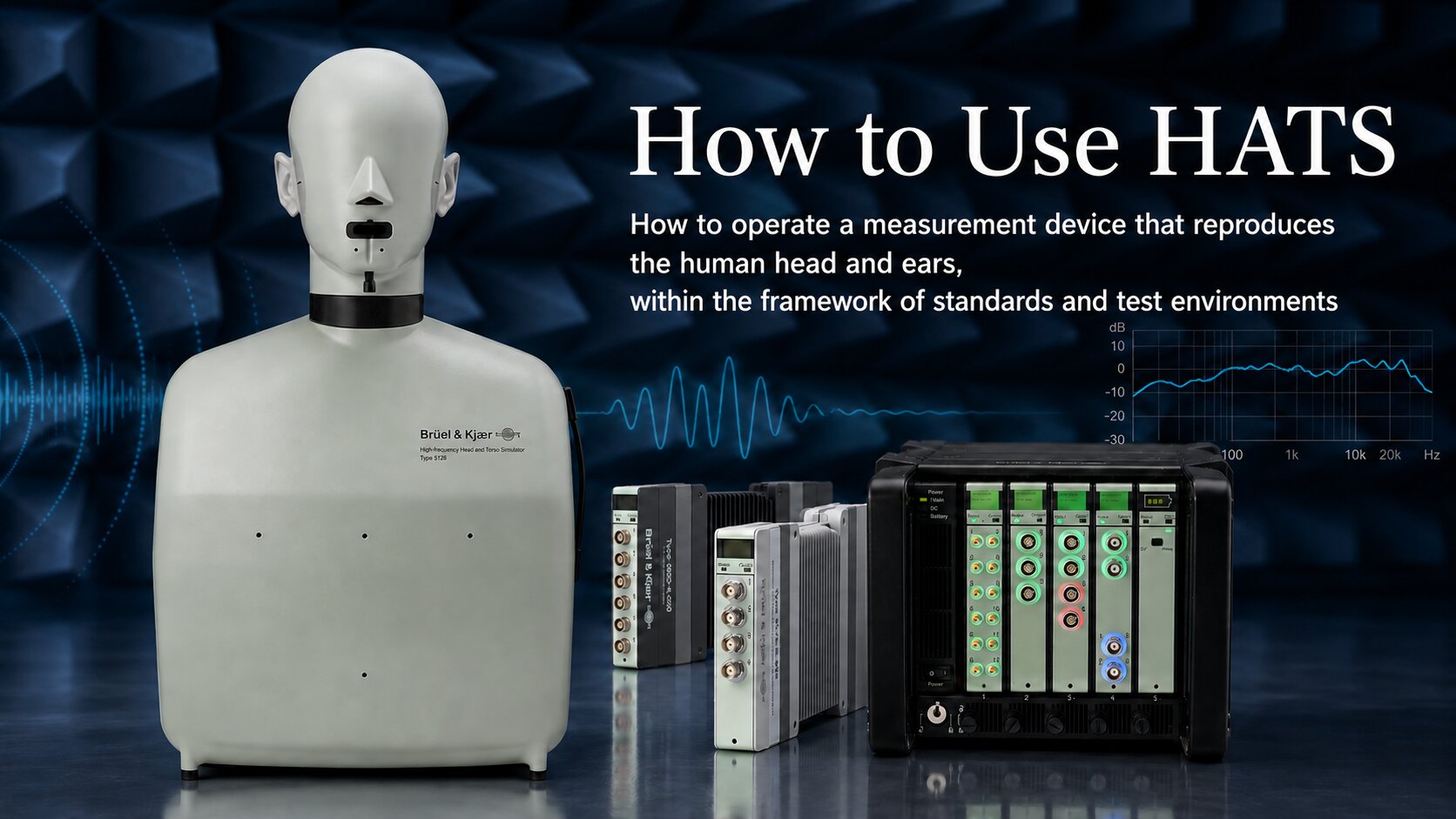
How to Use HATS ― Operating a Measurement System That Reproduces the Human Head and Ears Within the Framework of Standards and Acoustic Environments ― -
2026.04.13
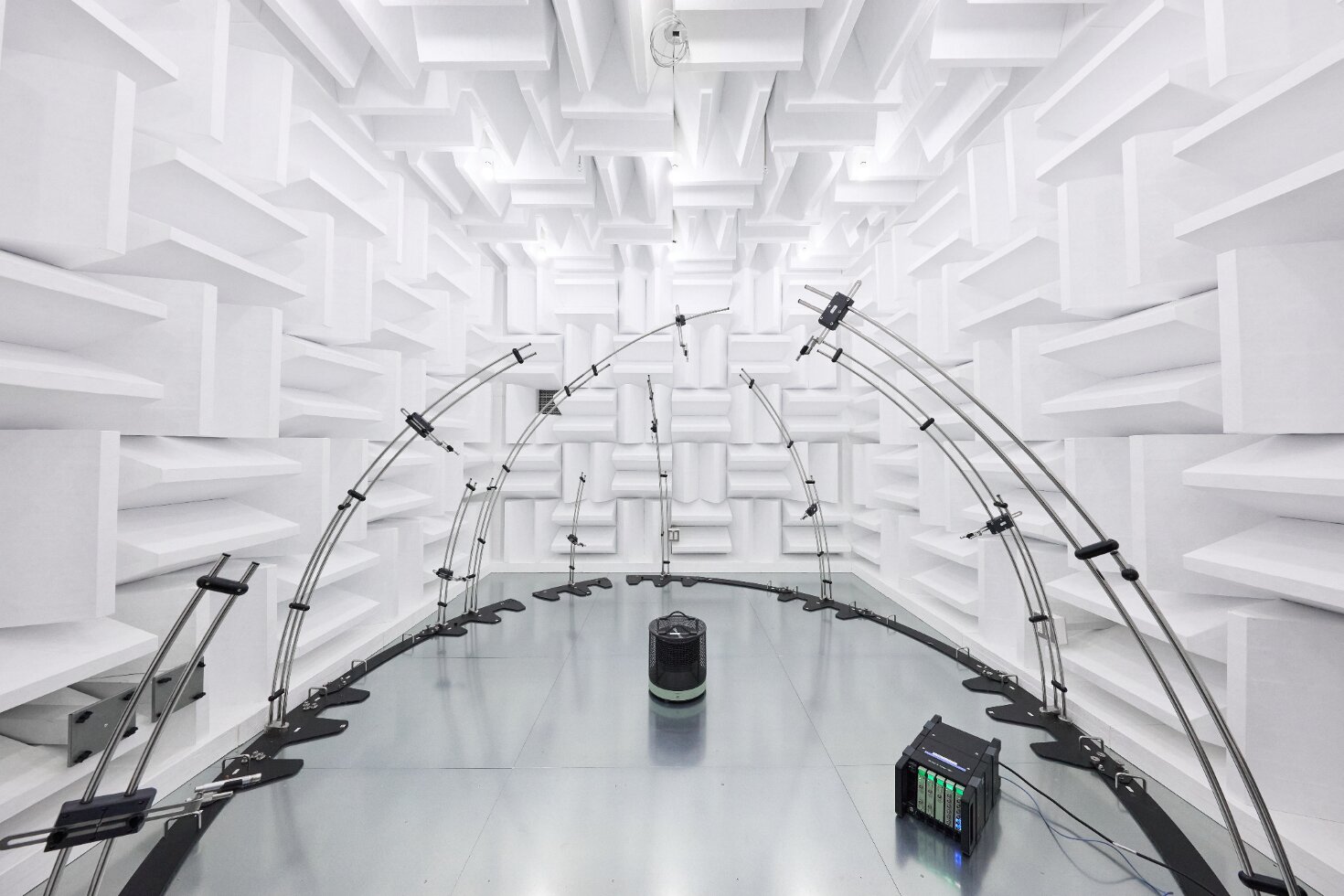
Evaluation Methods in Building Acoustics: Streamlining Field Measurements and Material Assessment in Laboratory Environments -
2026.03.23
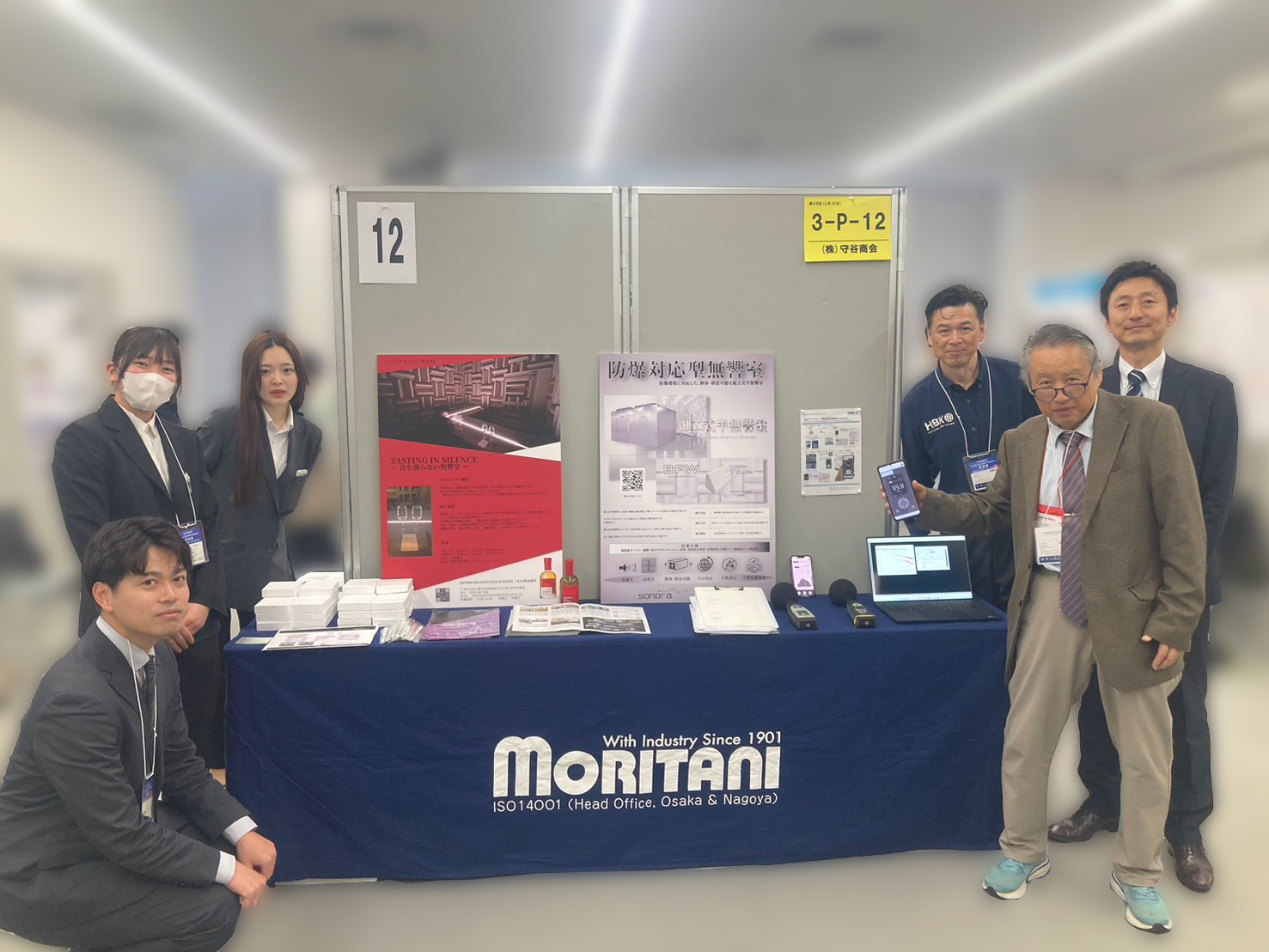
We participated in the corporate exhibition at the Acoustical Society of Japan (ASJ) Meeting on March 19, 2026 -
2026.03.10
How to Read Standards Related to Anechoic Chambers ― Organizing Sound Power Measurement Standards and Qualification of Test Environments ― -
2026.01.29
Can We Create “Absolute Silence” on Earth? — An Academic Reading of Anechoic Chambers and Ultra-Low Background-Noise Measurement —

Contact Us
- Contact us by email
-
- Contact us by phone
-
Moritani Shokai
(Machinery Department No. 2, Tokyo Head Office)


Introduction of the Manufacturer
-

Hottinger Bruel & Kjaer
HHBK is a merger of two companies: Brüel & Kjær of Denmark and HBM of Germany.
Brüel & Kjær is one of the world’s leading manufacturers of acoustic and vibration measurement instruments, known as a total measurement chain supplier.Learn more about HBK
-
Sonora Technology Co., Ltd.
Sonora Technology is a leading Japanese manufacturer of industrial anechoic chambers and anechoic boxes.
From design and manufacturing to installation and acoustic performance assurance, Sonora provides fully integrated solutions to build complete acoustic measurement environments from the ground up.Learn more about Sonora
Contact / Request Brochure
For inquiries or consultations regarding the total solutions provided by HBK × Sonora, please feel free to contact us using the Contact button.
If you would like a brochure sent by mail, please use the Request Brochure button.