

Technical Column
Evaluation Methods in Building Acoustics: Streamlining Field Measurements and Material Assessment in Laboratory Environments
Apr 13, 2026
- HBK × SONORA Acoustic Measurement Solution Official Website
- Technical Column
- Evaluation Methods in Building Acoustics: Streamlining Field Measurements and Material Assessment in Laboratory Environments
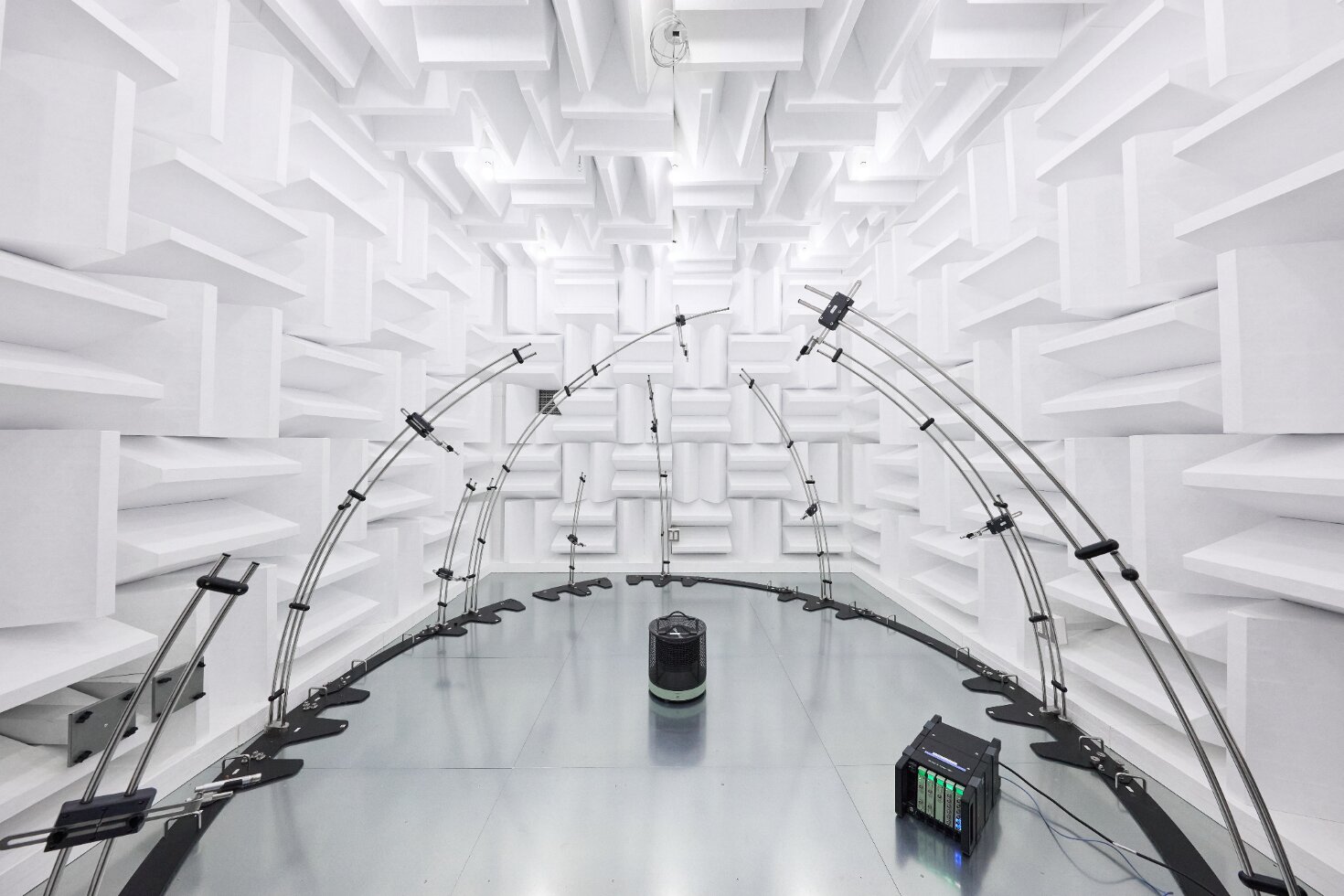
Acoustic Power Measurement
Conclusion
Accurate evaluation and design in building acoustics—such as airborne sound insulation, floor impact sound, and reverberation time—require two complementary elements: on-site measurements using a standards-compliant system capable of operating reliably under challenging field conditions (HBK), and highly precise baseline data obtained in a reproducible acoustic test environment (SONORA).
At Moritani & Co., Ltd., we integrate the systems of these two leading manufacturers—one specializing in measurement instrumentation and the other in acoustic test facilities—to provide a one-stop acoustic quality assurance solution, from building material development through to post-completion performance evaluation of real spaces.
Background and Rationale
Challenges of On-Site Evaluation and How HBK Addresses Them
In sound insulation measurements conducted on construction sites under standards such as ISO 16283 and ISO 140, there are many practical hurdles, including background noise, dust, and the need to move between measurement points such as the source room and the receiving room. HBK’s Building Acoustic Partner system—consisting of the 2255 Sound Level Meter, 2755 Smart Power Amplifier, and an omnidirectional sound source—dramatically improves field workflows through app-based automation and synchronized dual-device measurements of L1 (source room) and L2 (receiving room).
Free-Field Conditions in the Laboratory and SONORA’s Technology
On the other hand, comparative evaluation of a building material panel itself—such as its sound transmission loss or absorption coefficient—requires a disturbance-free laboratory environment. In SONORA’s anechoic test facilities, including the MFAC (Modular Fully-Anechoic Chamber), the test environment is designed based on ISO 3745:2012, with strong emphasis on achieving a free-field condition demonstrated by an environmental correction value of K2 ≤ 0.5 dB.
Since Annex K of the former ISO 3745:2003 has been removed, evaluation of the sound field can no longer rely simply on absorber material type or wedge length. Instead, reliable data acquisition now depends on performance-based verification—specifically, confirming whether the inverse square law is actually satisfied in the space.
Procedure and Practical Example: Workflow for Building Acoustic Measurements
The following workflow illustrates how building acoustic evaluation can be carried out efficiently in practice using the HBK system.
Measurement Planning (App Integration)
Using the HBK mobile app, the user sets the measurement target—such as a partition wall, floor, or external wall—and selects the applicable standard. Measurement points can also be predefined in advance.
Sound Source Placement and Setup
An omnidirectional sound source and the HBK 2755 amplifier are installed in the source room (L1). Noise generation can then be controlled and optimized wirelessly via the app.
Synchronized Measurement of Sound Pressure Level and Reverberation Time
Two HBK 2255 units are connected to the app, allowing simultaneous measurement of sound pressure levels in the source room (L1) and receiving room (L2). Even when performed by a single operator, this greatly reduces the time required to move between rooms.
Data Analysis and Report Generation
The measurement data are synchronized to a PC and automatically analyzed by the software. A standards-compliant report can then be generated with a single click.
Comparison: Distinct Roles of Field Measurement and Laboratory Evaluation
Proper use depends on the objective and project phase, and it is important to establish a workflow that links both approaches effectively.
Field Measurement (HBK Building Acoustics Solution)
| Primary purpose | Verification of overall sound insulation performance and room acoustics in actual buildings |
|---|---|
| Typical spaces | Apartments, offices, halls, and other buildings before or after completion |
| Example equipment | HBK 2255, 2755 amplifier, omnidirectional sound source |
| Acoustic conditions | Real-world environments, including the effects of background noise and flanking transmission |
| Advantages | Direct confirmation of actual acoustic performance under real operating and occupancy conditions |
| Limitations / points of attention | Highly susceptible to flanking transmission, making it difficult to isolate the intrinsic performance of an individual wall element |
Laboratory Evaluation (SONORA Acoustic Test Facilities)
| Primary purpose | Precise evaluation of sound absorption coefficient, sound transmission loss, and sound power level of individual building materials and products |
|---|---|
| Typical spaces | Anechoic chambers (MFAC / VSAC), semi-anechoic chambers (MSAC), sound transmission loss test rooms, and related facilities |
| Example equipment | HBK acoustic measurement systems combined with SONORA acoustic test facilities |
| Acoustic conditions | Controlled sound field environment (K2 correction value ≤ 0.5 dB, inverse square law confirmed) |
| Advantages | Enables external noise to be eliminated, allowing pure comparative assessment against other materials and supporting product development |
| Limitations / points of attention | Cannot fully reproduce actual installation conditions, such as site-specific gaps, joints, or detailing |
Key Takeaways
| Optimization of field measurements | HBK’s dedicated building acoustics solution dramatically reduces both labor and human error in difficult on-site measurement environments. |
|---|---|
| Reliability of laboratory evaluation | Precise acoustic assessment of building materials requires SONORA’s test facilities, designed to meet current standards such as ISO 3745:2012. |
| Total support from Moritani | From building accurate laboratory environments for material evaluation (SONORA) to implementing high-efficiency field measurement systems (HBK), as well as integrating both into a complete acoustic evaluation solution, Moritani provides comprehensive support through a single point of contact. |
Contact
- Inquiries regarding demo unit rentals for HBK products
- Budgetary cost estimates and layout proposals for SONORA anechoic chambers (including MFAC) and sound insulation facilities
- Support for introducing integrated acoustic evaluation solutions combining both systems
▶ [Contact Us Here]
Latest Posts in Technical Column
-
2026.04.13
Evaluation Methods in Building Acoustics: Streamlining Field Measurements and Material Assessment in Laboratory Environments -
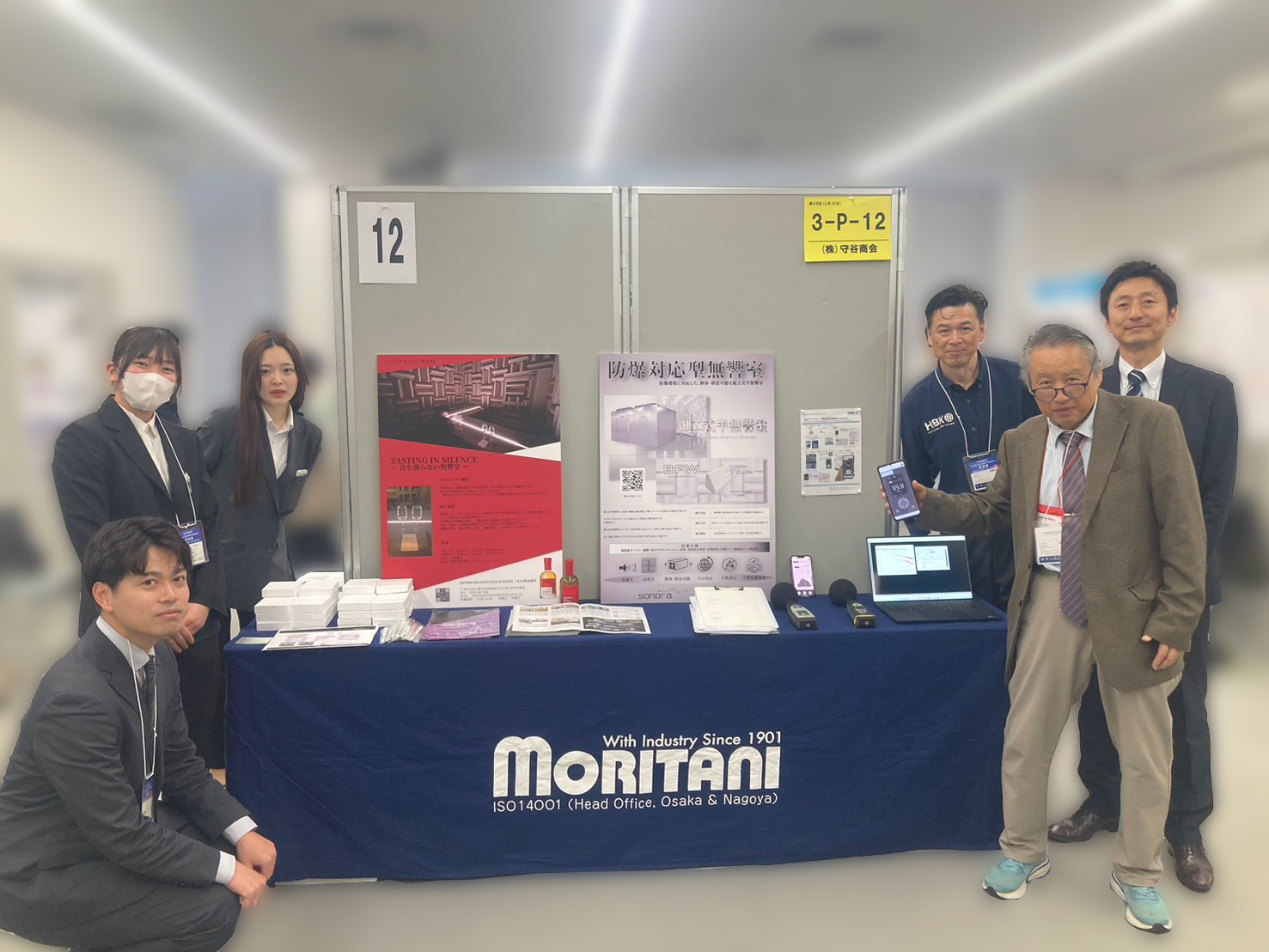
2026.03.23
We participated in the corporate exhibition at the Acoustical Society of Japan (ASJ) Meeting on March 19, 2026 -
2026.03.10
How to Read Standards Related to Anechoic Chambers ― Organizing Sound Power Measurement Standards and Qualification of Test Environments ― -
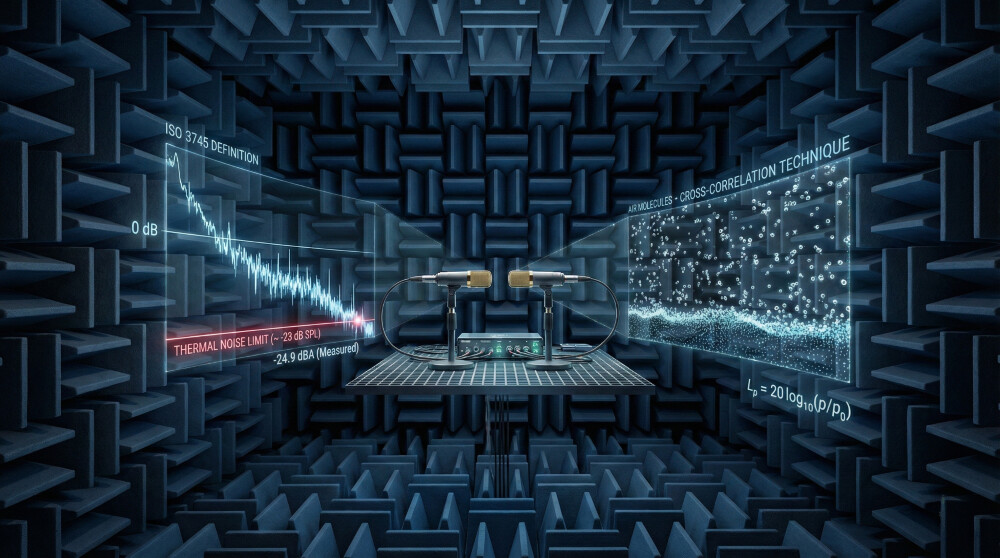
2026.01.29
Can We Create “Absolute Silence” on Earth? — An Academic Reading of Anechoic Chambers and Ultra-Low Background-Noise Measurement — -

2025.12.11
The Geometry of Acoustic Design — How Chamber Shape Defines Sound Field Performance -
2025.12.06
Integrated Design of Anechoic Chambers with Auxiliary Equipment — Balancing Silence and Functionality — -
2025.11.30
Modular Semi-Anechoic Chambers — A Flexible Solution for Deployable Acoustic Testing — -
2025.11.25
Measuring Silence: How Anechoic Chambers Support Industrial Quality -
2025.11.18
Designing for Reproducibility — Environmental Stabilization in Acoustic Measurement — -
2025.11.13
The New Generation of Mobile Acoustic Measurement — Field Accuracy for Building and Environmental Sound Testing —

Contact Us
- Contact us by email
-
- Contact us by phone
-
Moritani Shokai
(Machinery Department No. 2, Tokyo Head Office)


Introduction of the Manufacturer
-

Hottinger Bruel & Kjaer
HHBK is a merger of two companies: Brüel & Kjær of Denmark and HBM of Germany.
Brüel & Kjær is one of the world’s leading manufacturers of acoustic and vibration measurement instruments, known as a total measurement chain supplier.Learn more about HBK
-
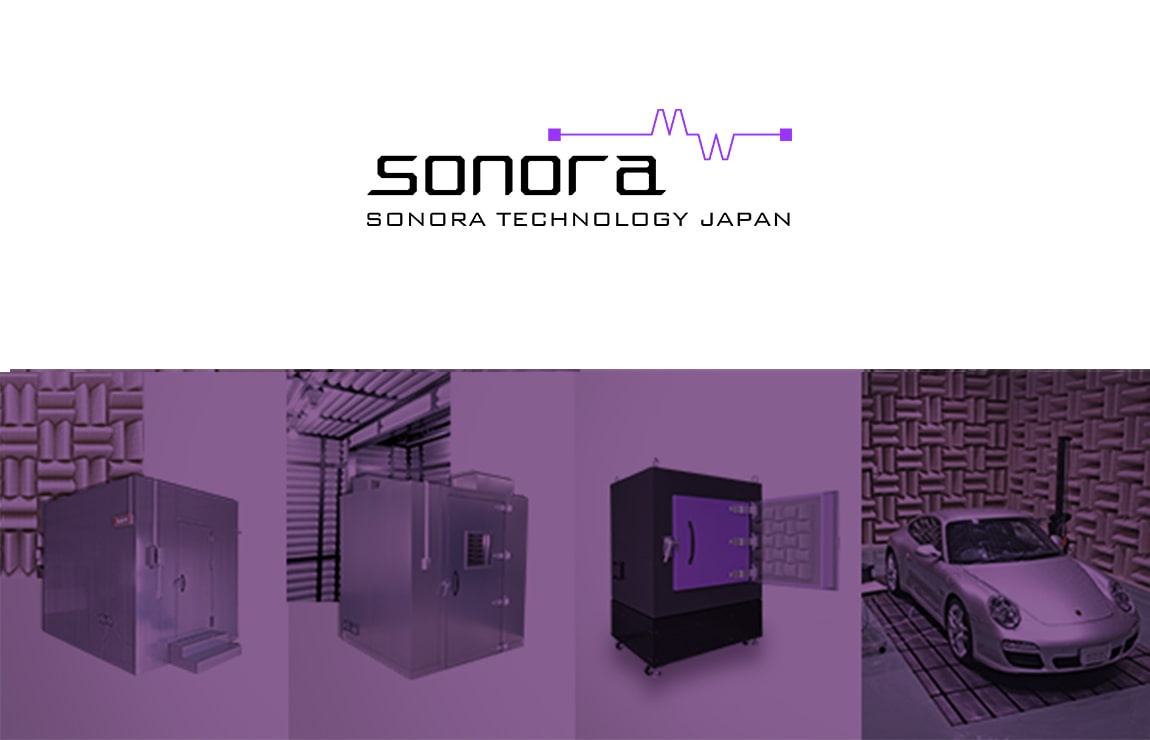
Sonora Technology Co., Ltd.
Sonora Technology is a leading Japanese manufacturer of industrial anechoic chambers and anechoic boxes.
From design and manufacturing to installation and acoustic performance assurance, Sonora provides fully integrated solutions to build complete acoustic measurement environments from the ground up.Learn more about Sonora
Contact / Request Brochure
For inquiries or consultations regarding the total solutions provided by HBK × Sonora, please feel free to contact us using the Contact button.
If you would like a brochure sent by mail, please use the Request Brochure button.