

Technical Column
Misconceptions About a Sound Absorption Coefficient of 0.99 ― How ISO 3745:2012 Changed the Philosophy of Anechoic Room Evaluation ―
May 18, 2026
- HBK × SONORA Acoustic Measurement Solution Official Website
- Technical Column
- Misconceptions About a Sound Absorption Coefficient of 0.99 ― How ISO 3745:2012 Changed the Philosophy of Anechoic Room Evaluation ―
Acoustic Power Measurement
Introduction
When discussing the specifications of an anechoic room, the figure “sound absorption coefficient of 0.99” can sometimes take on a life of its own. Seeing this value listed in a catalog for wedge-shaped sound absorbers, some people may assume that the space automatically qualifies as an anechoic room.
However, a sound absorption coefficient of 0.99 is only an indicator of the performance of the absorbing material itself. Whether the space satisfies the sound field conditions required by sound power measurement standards is a separate matter.
This article explains the relationship between sound absorption coefficients and the qualification of an anechoic room, and reviews the concept that has been clarified since ISO 3745:2012: evaluation based on whether the inverse-square law is satisfied.
What Does a Sound Absorption Coefficient of 0.99 Mean?
As a starting point, the sound absorption coefficient shown in catalogs is, in most cases, a value measured for the material itself in a laboratory. Typical measurement methods include the following:
- Normal-incidence sound absorption coefficient
Impedance tube method: JIS A 1405-2 / ISO 10534-2 - Reverberation room sound absorption coefficient
JIS A 1409 / ISO 354
For wedge-shaped absorbers, measurements may also be performed using a free-field method in an anechoic room. In any case, the resulting value represents the absorption characteristics of that material under specific incidence conditions. It does not represent the sound field performance of the entire room.
In other words, the value 0.99 simply means that, under specific measurement conditions, 99% of the incident acoustic energy did not return as reflected sound. This value alone cannot determine whether the space satisfies the requirements of an anechoic room under measurement standards.
High Absorption Does Not Necessarily Mean an Anechoic Room
Even if high-absorption wedges are installed on all surfaces, this does not necessarily mean that the space satisfies the free-field conditions required by ISO 3745. In practice, sound field performance is affected by factors such as the following:
- Insufficient low-frequency absorption
The sound absorption coefficient is frequency-dependent, and performance decreases in certain frequency ranges, especially below the cut-off frequency. - Relationship between room dimensions, wedge length, and wavelength
In frequency ranges where the wedge length is less than one-quarter of the wavelength, sufficient absorption may not be achieved. - Room shape and geometry
Wall symmetry, corner treatment, and reflections caused by protruding equipment can interfere with the sound field. - Background noise and sound insulation performance
Intruding external noise and equipment noise determine the lower measurement limit. - Sound source and microphone placement
The boundary between near-field and far-field conditions, as well as the directivity of the sound source, can affect measurement results.
As discussed in previous technical columns such as “Design Theory of the Inverse-Square Law Valid Region” and “The Geometry of Designing an Anechoic Room,” the performance of an anechoic room is not determined solely by the absorption coefficient of its wedges. It is a matter of comprehensive design: how the sound field is established as a room.
It is also possible that even if the sound absorption coefficient of an absorber measured in a laboratory is below 0.99, the inverse-square law may still be satisfied in the room as a three-dimensional space.
The Conceptual Shift in ISO 3745:2012
The sound power measurement standard ISO 3745 specifies precision methods for anechoic rooms and hemi-anechoic rooms. In the ISO catalog, it is described as Precision methods for anechoic rooms and hemi-anechoic rooms. The current version is ISO 3745:2012, which was confirmed as current in 2022.
One of the major points clarified in the 2012 edition is the approach to qualifying anechoic and hemi-anechoic rooms. The key points are as follows.
Separation of Test Room Qualification Methods
In the past, the evaluation of anechoic room performance was included within ISO 3745 itself. However, the qualification of free-field environments has moved toward being organized separately under the ISO 26101 series. Currently, ISO 26101-1:2021 covers the qualification of free-field environments, while ISO 26101-2:2024 addresses the determination of environmental corrections.
From Absorber Specifications to Measured Sound Field Performance
The basis for determining compliance has shifted from absorber specifications, such as wedge absorption coefficient or wedge length, to the actual sound field established inside the room.
Evaluation Based on Deviation from the Inverse-Square Law
The concept of placing a sound source, measuring sound pressure levels at different distances, and evaluating how much the attenuation deviates from the theoretical value of −6 dB per doubling of distance has been more clearly positioned. This can be considered an evaluation equivalent to K₂.
In other words, the direction of the standard has shifted toward verifying an anechoic room by measuring it as a room, rather than by simply accumulating material specifications.
The Inverse-Square Law Is the Essential Criterion
According to the concepts of ISO 3745:2012 and the ISO 26101 series, the essential evaluation criterion for an anechoic room can be summarized as follows:
A sufficiently large region must be secured within the test room where the inverse-square law is satisfied.
In a free field, the sound pressure level decreases by 6 dB each time the distance from a point source doubles. If this relationship can be confirmed through measurement within the target frequency range, measurement distances, and allowable deviation range, the space can be judged to function as a free-field environment under the standard.
As a guideline in ISO 3745, the allowable deviation is approximately:
- Class 1: ±1.5 dB
- Class 2: ±2.5 dB
Conversely:
- Even if wedges with a sound absorption coefficient of 0.99 are installed, if the inverse-square law breaks down at low frequencies, the room does not conform in that frequency range.
- Even if the catalog sound absorption coefficient of the wedges is not specified, the room can satisfy the standard requirements if the inverse-square law is established as a room.
The “sound absorption coefficient” is one element of the specification.
The “establishment of the inverse-square law” is the verification of the result.
Not confusing these two concepts is the starting point for properly considering anechoic room specifications.
Practical Points to Consider
When planning a new facility or upgrading an existing one, if the specification only states “sound absorption coefficient of 0.99 above XX Hz,” this should be understood as a declaration of material performance, not a guarantee of compliance with a measurement standard.
The points that should be confirmed are instead the following:
- The target measurement standard, such as ISO 3745 or ISO 3744, and the required accuracy class
- The reference standard and procedure for qualification, such as ISO 26101-1
- The target frequency range and measured data showing deviation from the inverse-square law within that range
- The size of the test object and the extent of the inverse-square-law-valid region required to accommodate it
From Moritani’s perspective, when combining SONORA’s test space design with HBK’s measurement systems, organizing requirements based on “sound field performance” rather than “wedge specifications” leads to more reliable final measurements.
Conclusion
“Because the sound absorption coefficient is 0.99, it is an anechoic room.”
This understanding is one step removed from the philosophy of current international standards.
Since ISO 3745:2012, the evaluation axis for anechoic rooms has shifted from material specifications to sound field performance. More specifically, the focus has been placed on the establishment of a free field, namely the deviation from the inverse-square law.
The sound absorption coefficient remains an important design parameter. However, it cannot, by itself, demonstrate compliance with a measurement standard.
When considering facility specifications, the correct starting point is to ask:
Which standard, which class, and which frequency range must the room comply with?
Starting from this question is the most reliable path toward creating a proper measurement environment.
Latest Posts in Technical Column
-

2026.09.30
Differences Between Free-Field, Pressure-Field, and Random-Incidence Microphones: How to Choose and Use Them for Your Measurement Space -
2026.08.03
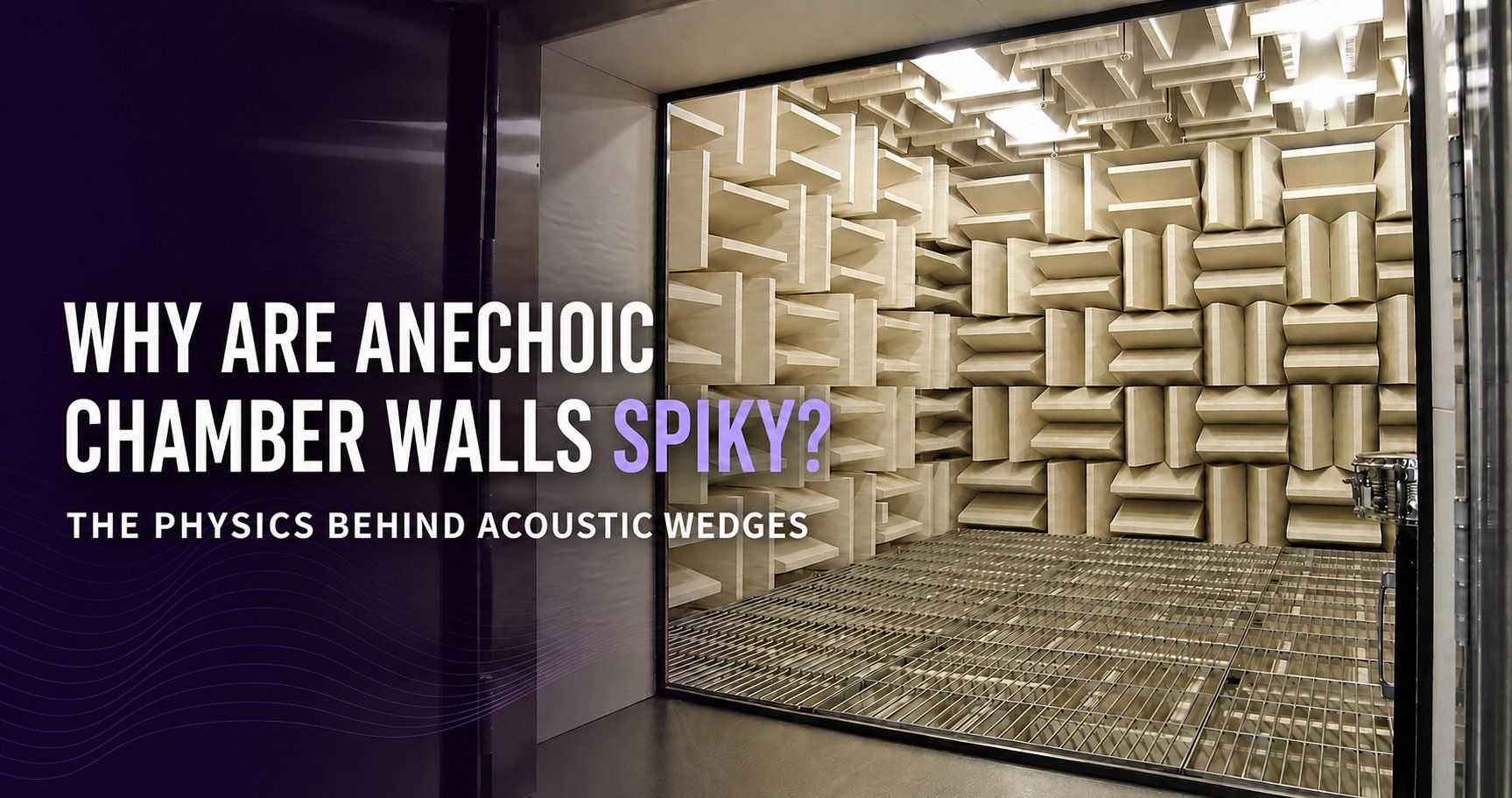
Why Are Anechoic Chamber Walls Spiky? How Acoustic Wedges Work -
2026.07.28
White Noise vs Pink Noise vs Sweep Signals -
2026.07.13
Acoustic Adjustment with Soundproof Partitions ― Applications for Anechoic Chamber Tuning, Simplified Acoustic Measurements, and STI Environment Design ― -
2026.07.08
Why HBK × SONORA? ― The Benefits of Integrating Acoustic Instrumentation and Acoustic Test Environments ― -
2026.05.18
Misconceptions About a Sound Absorption Coefficient of 0.99 ― How ISO 3745:2012 Changed the Philosophy of Anechoic Room Evaluation ― -
2026.05.13
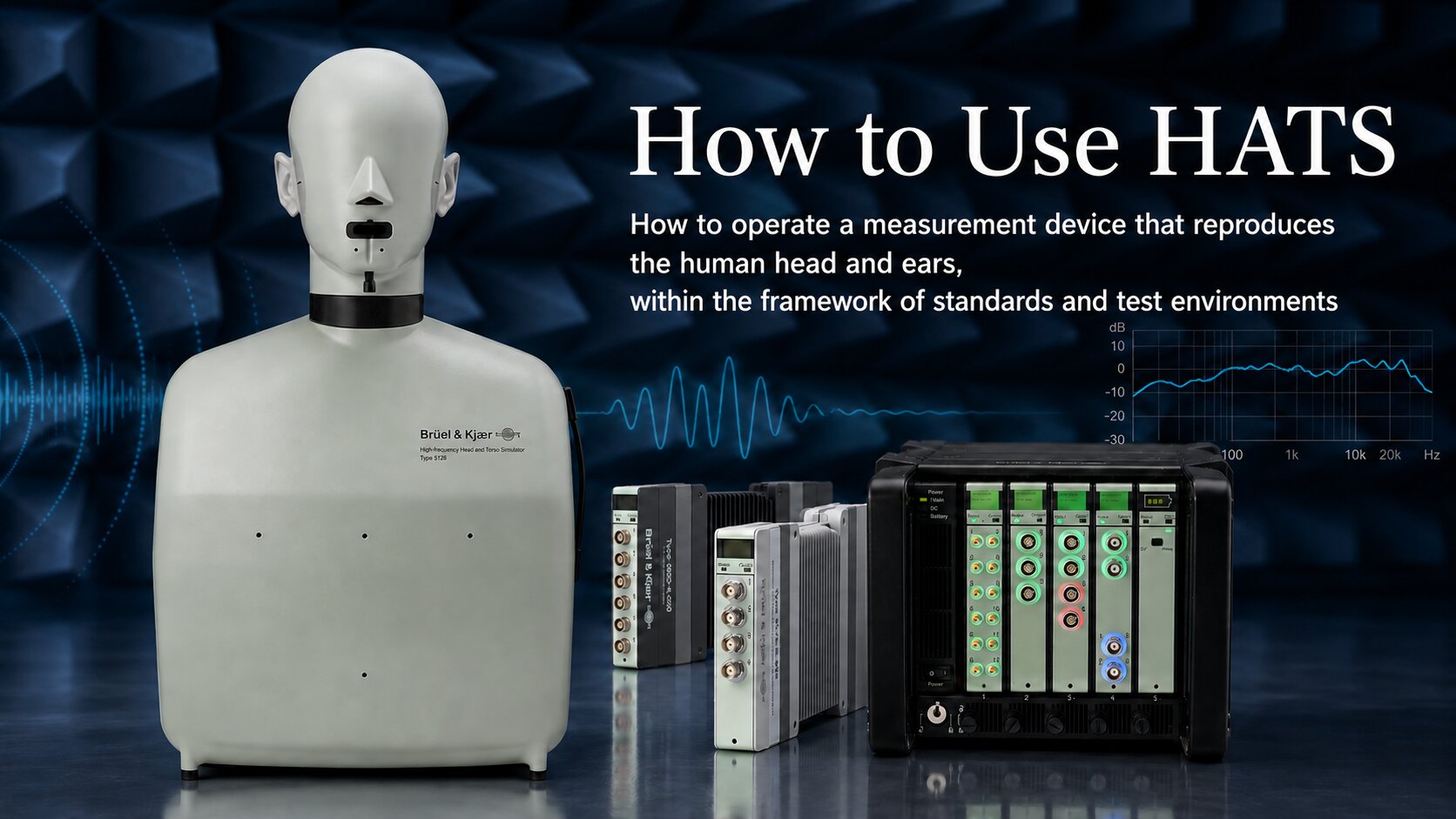
How to Use HATS ― Operating a Measurement System That Reproduces the Human Head and Ears Within the Framework of Standards and Acoustic Environments ― -
2026.04.13
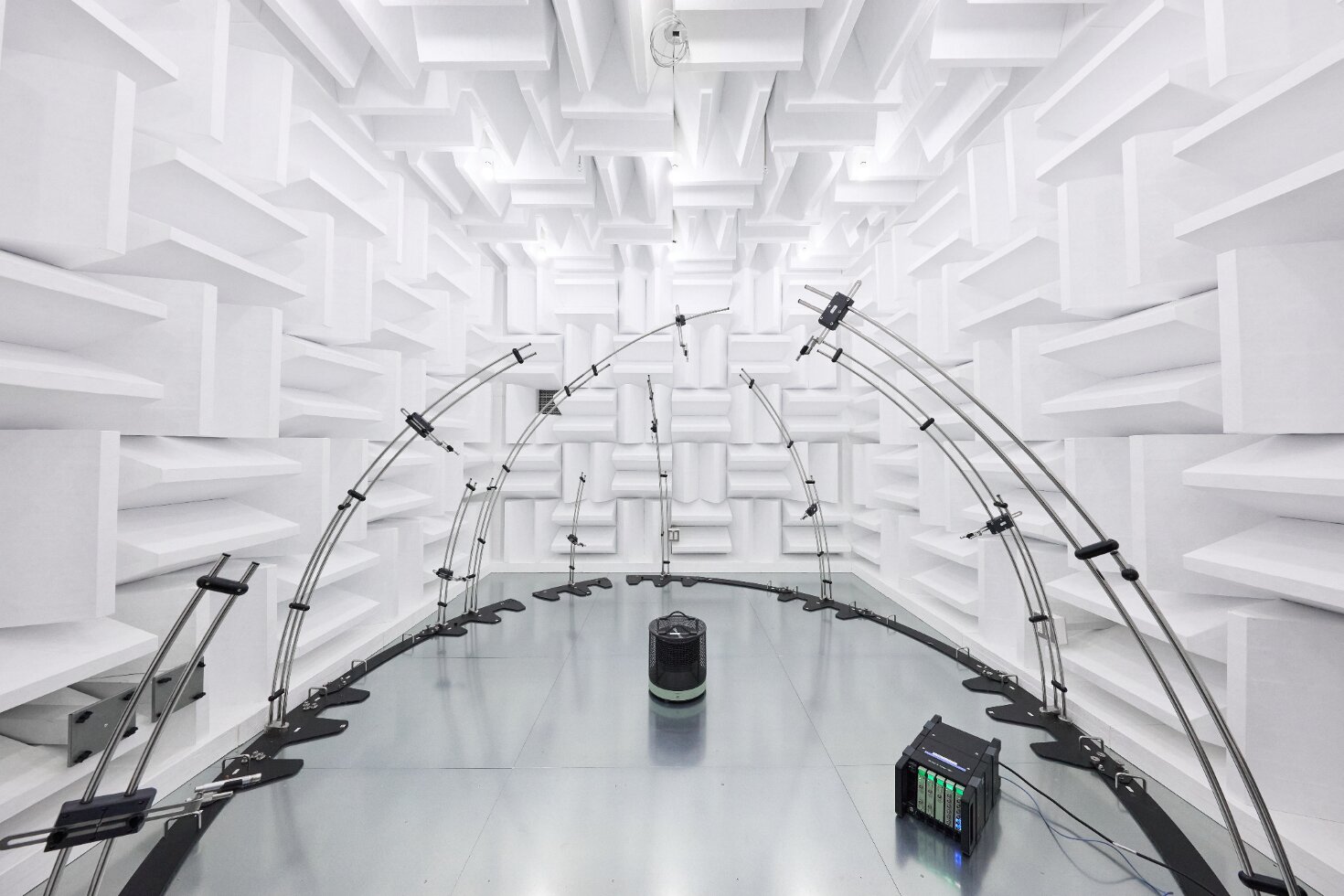
Evaluation Methods in Building Acoustics: Streamlining Field Measurements and Material Assessment in Laboratory Environments -
2026.03.23
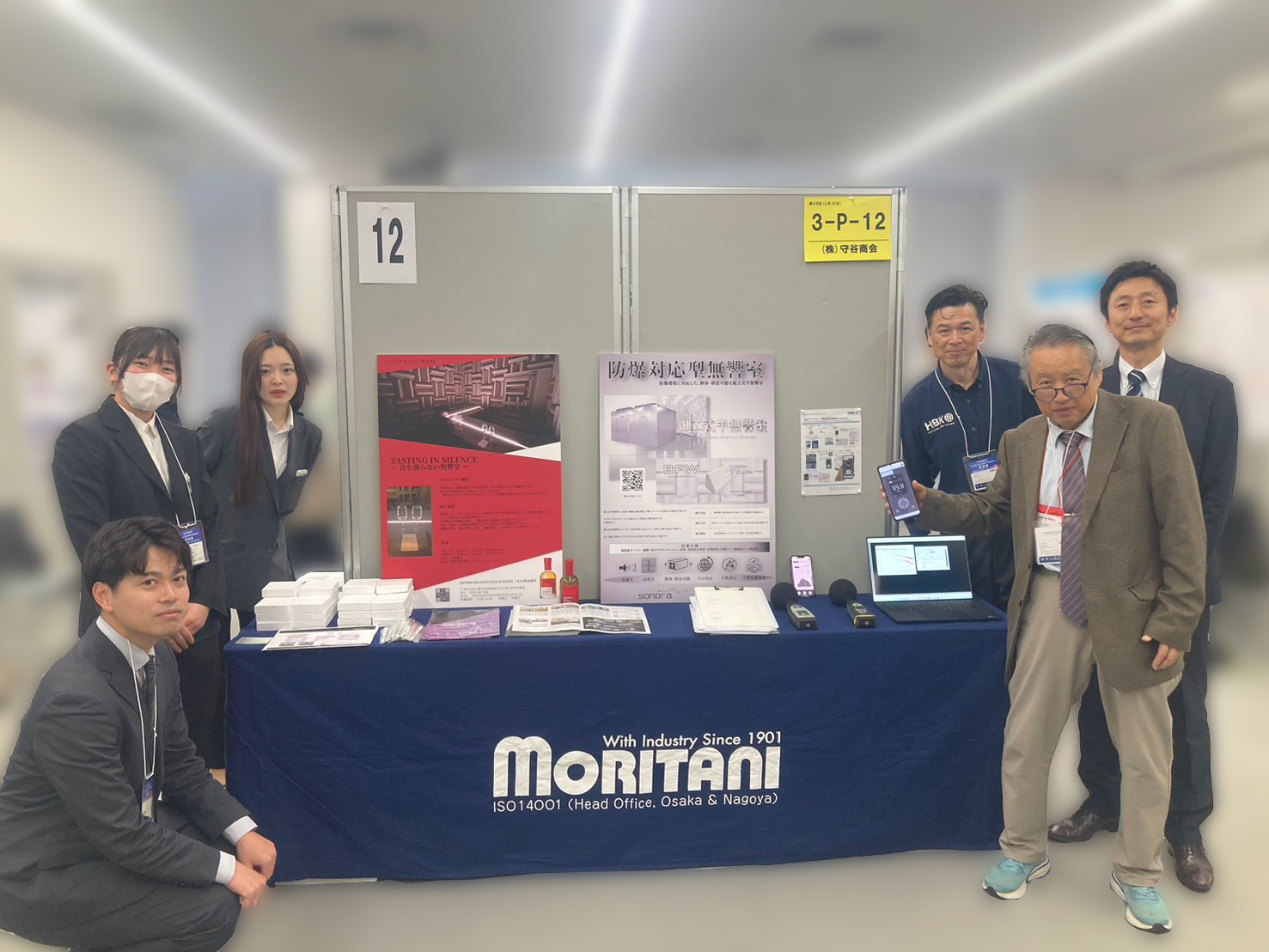
We participated in the corporate exhibition at the Acoustical Society of Japan (ASJ) Meeting on March 19, 2026 -
2026.03.10
How to Read Standards Related to Anechoic Chambers ― Organizing Sound Power Measurement Standards and Qualification of Test Environments ―

Contact Us
- Contact us by email
-
- Contact us by phone
-
Moritani Shokai
(Machinery Department No. 2, Tokyo Head Office)


Introduction of the Manufacturer
-

Hottinger Bruel & Kjaer
HHBK is a merger of two companies: Brüel & Kjær of Denmark and HBM of Germany.
Brüel & Kjær is one of the world’s leading manufacturers of acoustic and vibration measurement instruments, known as a total measurement chain supplier.Learn more about HBK
-
Sonora Technology Co., Ltd.
Sonora Technology is a leading Japanese manufacturer of industrial anechoic chambers and anechoic boxes.
From design and manufacturing to installation and acoustic performance assurance, Sonora provides fully integrated solutions to build complete acoustic measurement environments from the ground up.Learn more about Sonora
Contact / Request Brochure
For inquiries or consultations regarding the total solutions provided by HBK × Sonora, please feel free to contact us using the Contact button.
If you would like a brochure sent by mail, please use the Request Brochure button.